
Timothy C. Germann
Senior Scientist
Los Alamos National Laboratory
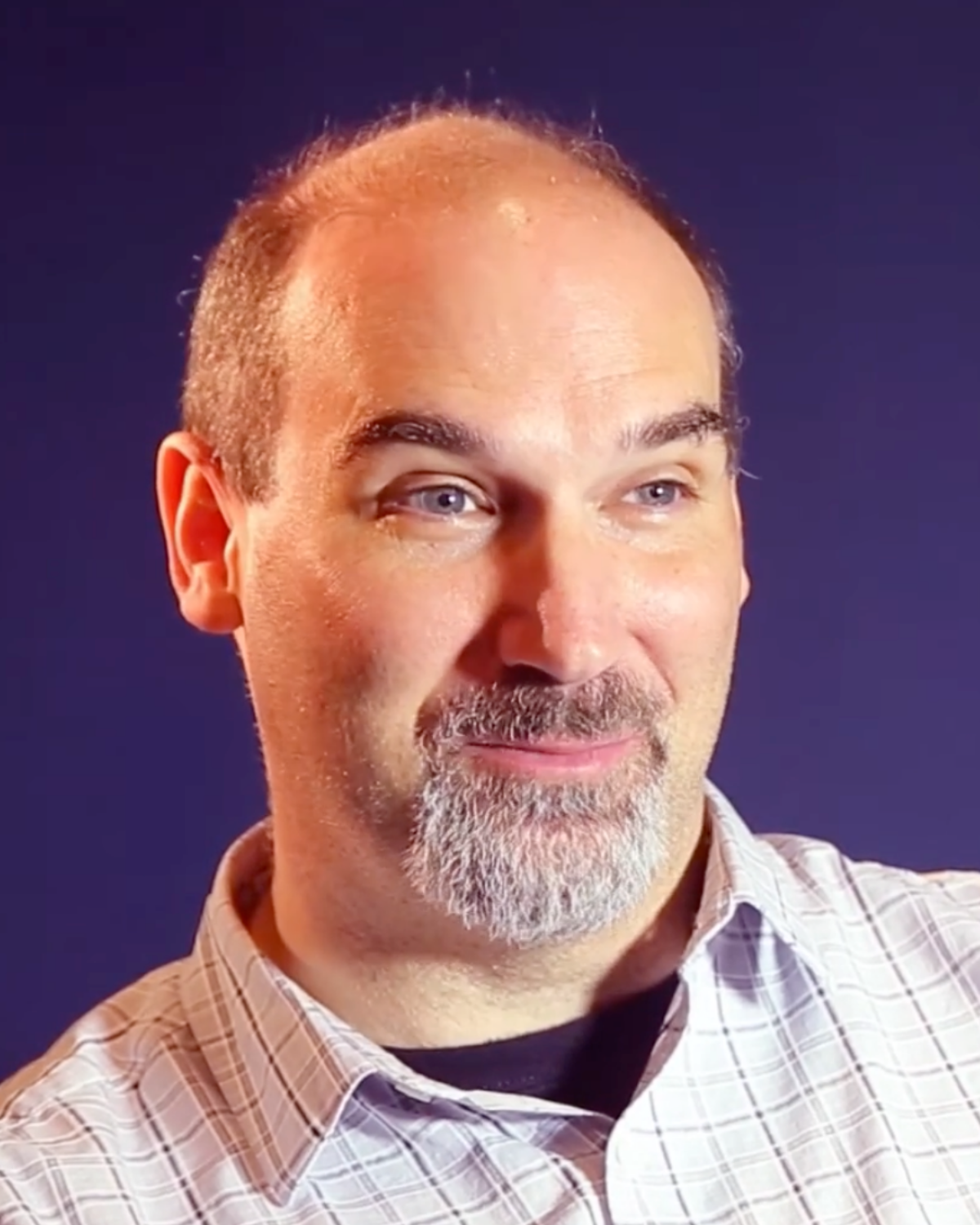
Tim Germann is in the Physics and Chemistry of Materials Group (T-1) at Los Alamos National Laboratory (LANL). He received BS degrees in chemistry and computer science from the University of Illinois at Urbana-Champaign, and a Ph.D. in Chemical Physics from Harvard University, where he was a DOE Computational Science Graduate Fellow.
Since joining LANL in 1997, Tim has developed and applied large-scale molecular dynamics simulations to the study of dynamic materials behavior, including shock compression and release, sliding friction, and detonation. He also led the development of a novel capability for large-scale agent-based simulations of infectious disease outbreaks, used to guide the design of pandemic influenza mitigation strategies and in response to 2009 H1N1 influenza and COVID-19 pandemics.
He led the ASCR Exascale Co-Design Center for Materials in Extreme Environments (ExMatEx) from 2010-6 and the Exascale Computing Project (ECP)’s Co-design center for Particle Applications (CoPA) from 2016-9, then served as Co-Design technical lead until ECP’s completion in 2024. He is a Fellow of LANL and the American Physical Society (APS), past chair of the APS Division of Computational Physics and APS Topical Group on Shock Compression of Condensed Matter, and was a member of the DOE Advanced Scientific Computing Advisory Committee from 2016 until its termination in 2025. Since 2019, he has served as Chief Operating Officer for the NNSA Predictive Science Academic Alliance Program (PSAAP).
Molecular Dynamics Simulations: Useful, yes. But Predictive?
Over the past 30 years, I have witnessed (and played a marginal role in) the transformation of molecular dynamics simulations from a tool used with idealized models such as hard sphere or Lennard-Jones interactions to understand basic “molecular hydrodynamics” and atomistic mechanisms underlying materials response (which in turn have been used to develop statistical mechanics-based descriptions of the structure and dynamics of liquids and solids) to one used with realistic interatomic force fields to interpret and guide experimental studies and design of new materials. These attempts at experimental validation have had some remarkable successes, but also a number of humbling experiences – and often no a priori way to know which of these two outcomes is more likely! The relatively recent emergence (and almost total domination) of machine learning-based force fields has brought both challenges and opportunities in quantifying the uncertainty of MD predictions, something which is rarely done in practice. I’ll describe the evolution of this specific subfield, as well as broader efforts within NNSA’s Predictive Science Academic Alliance Program (PSAAP) to advance predictive modeling and simulation capabilities, including the newly launched PSAAP IV Centers, which will be highlighted on Day 2 of this symposium.