
Brian Spears
Director, AI Innovation Incubator,
Lawrence Livermore National Laboratory
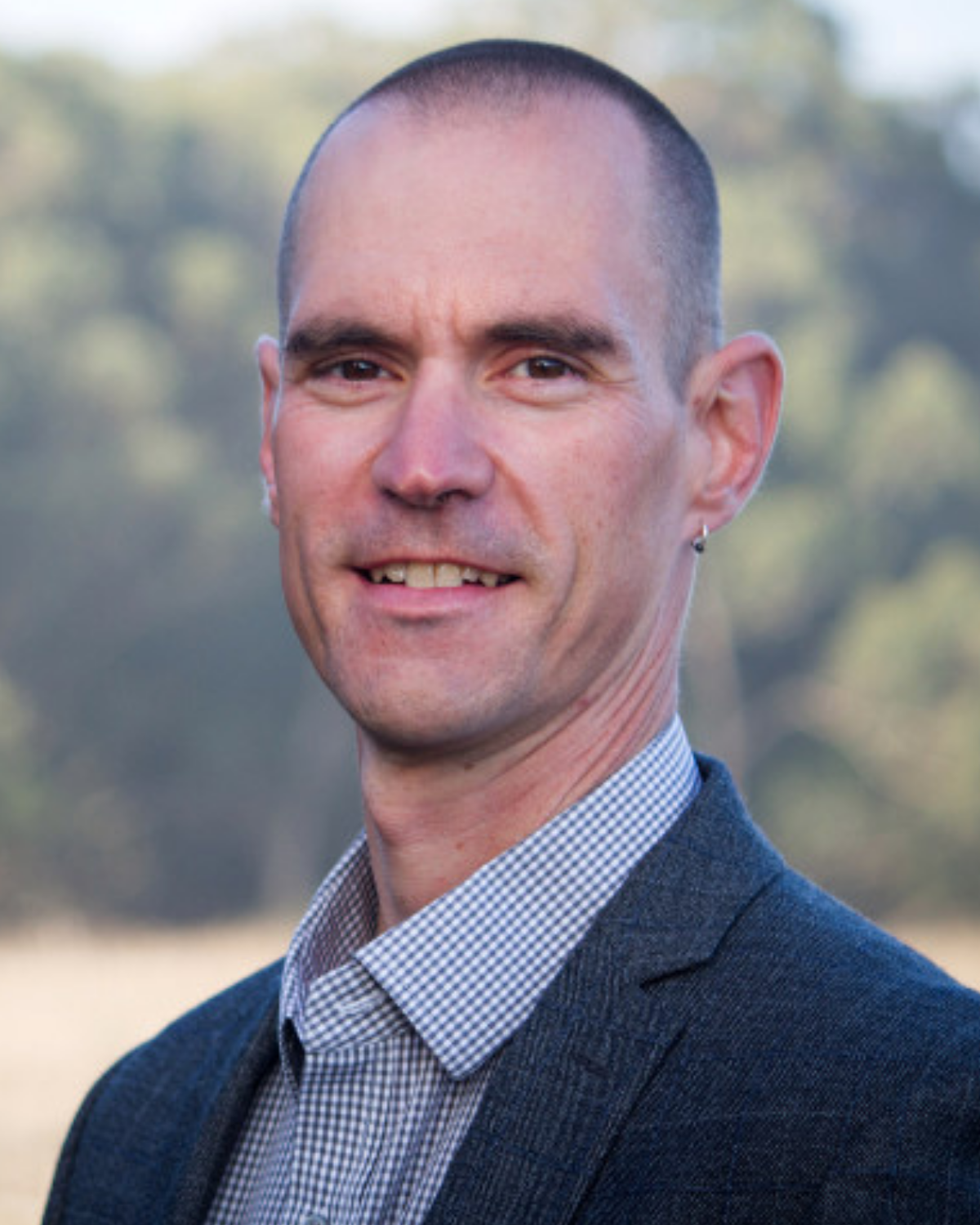
Brian Spears is the director of Artificial Intelligence (AI) efforts at Lawrence Livermore National Laboratory (LLNL). He is responsible for setting vision for development and deployment of AI methods for national security missions while driving LLNL excellence in AI for science. He is a principal architect of Cognitive Simulation – artificial intelligence (AI) methods that combine high-performance simulation and precision experiments to improve scientific prediction. He is also leads the LLNL AI Innovation Incubator, AI3, which develops strong public-private partnerships on collaborative research projects to advance scientific AI in the national interest.
Brian served as the Deputy for Inertial Confinement Fusion (ICF) Modeling, where he guided the scientific simulation half of the ICF program at the National Ignition Facility (NIF) through its historic achievement of nuclear fusion ignition. His team used novel AI methods to predict fusion ignition for the first time in history. In his personal research, he applies cognitive simulation techniques to stockpile stewardship missions with emphasis on quantifying uncertainty in inertial confinement fusion (ICF) experiments and developing a new generation of self-driving laboratory systems.
He received the LLNL Mid-Career Recognition for career achievements in research. He is the recipient of two Secretary of Energy Achievement Awards, multiple National Nuclear Security Administration Defense Programs Awards of Excellence, the Hyperion HPC Innovation Award, and the HPC Wire Editors’ Choice Award for Best Use of High-Performance Computing in Energy. Brian completed his PhD at the University of California, Berkeley, where he was a National Defense Science and Engineering Graduate Fellow and studied topological methods for high-dimensional dynamical systems. He also holds a BS in mechanical engineering and a BA in liberal arts from the University of Texas at Austin. When not doing science, he can be found racing his bike or chauffeuring his two children to swim practice.
Genesis Mission: Transforming US Science With AI