Events

- This event has passed.
Mathematics – MICDE – MCAIM joint colloquium: Peter Bosler, Sandia National Laboratories
March 17 @ 4:00 pm - 5:00 pm
Venue: 1360 East Hall
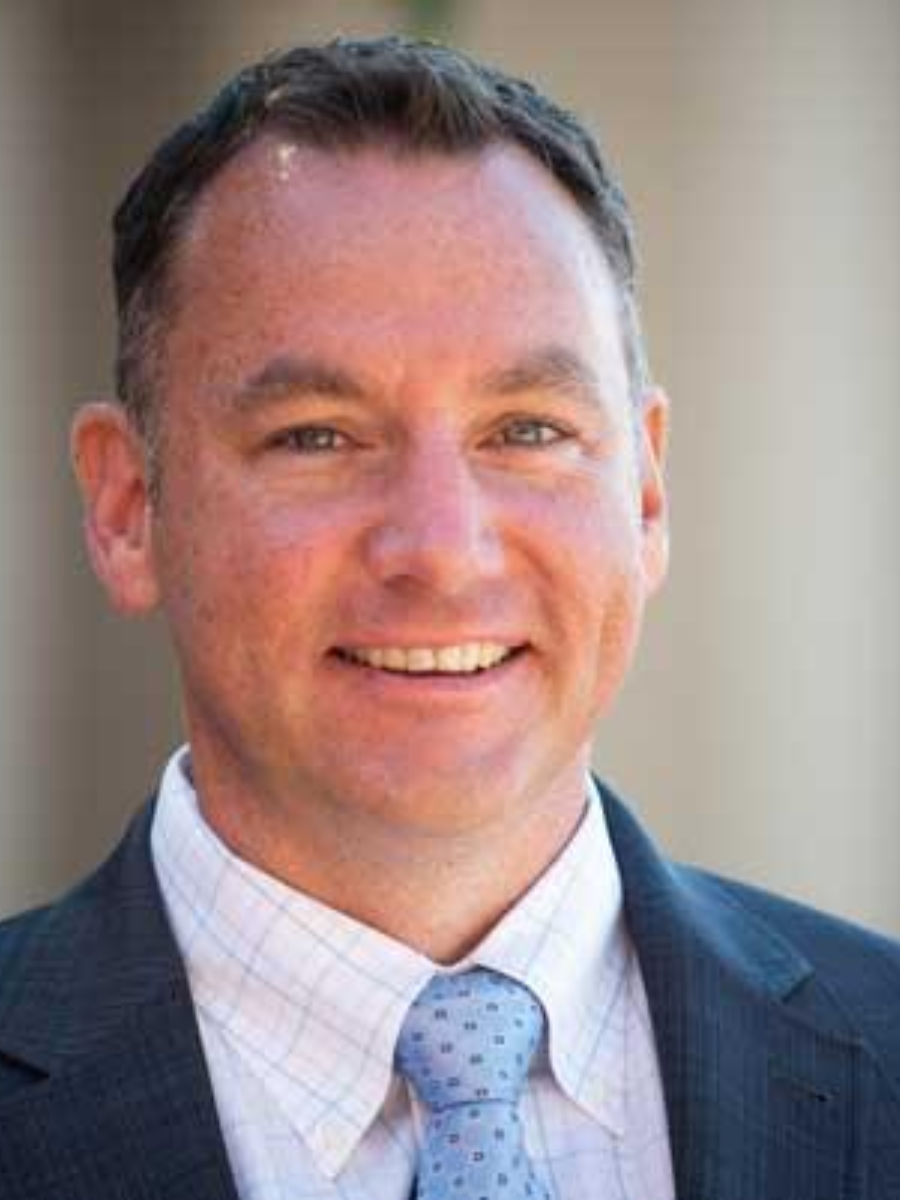
Bio: Dr. Bosler received his B.S. degree with Honors in Oceanography from the U.S. Naval Academy in 2002. In 2002-2007, he served as an officer in the U.S. Navy with active duty service that included both surface warfare and meteorology/oceanography operational support. Upon completing his service, he started graduate studies at the University of Michigan and received a Ph.D. degree in Applied and Interdisciplinary Mathematics in 2013. In 2014, he received the John von Neumann Postdoctoral Fellowship at Sandia National Laboratories, and thereafter, he became a staff member in the Center for Computing Research at Sandia. His projects involve close coupling between numerical methods development, data collection, application science, and high-performance computing. Recent projects focus on climate modeling and plasma physics. Dr. Bosler received the Department of Energy Early Career Award for Advanced Scientific Computing in 2022 and the Presidential Early Career Award for Science and Engineering in 2025.
Accelerating Earth System Simulation
Abstract: Providing high-quality “actionable information” for strategic risk analysis is amongst the primary goals of the U.S. Department of Energy’s Exascale Earth System Model (E3SM). The simulation speed required to generate high-quality localized predictions at seasonal-to-decadal time scales is very high. In this talk, we highlight some algorithmic design decisions that combine new research with classical numerical methods to enable E3SM’s ultra-high resolution configuration to achieve exascale performance and win the inaugural Gordon Bell Prize for Climate in 2023. Our design strategies tailor mathematical methods to both the unique features of the application space and to the heterogeneous computing architectures of exascale supercomputers. Ultimately, these efforts doubled the speed of the most computationally demanding component of E3SM, its atmosphere model. We will also discuss new and ongoing research associated with opportunities afforded by these performance gains.
The MICDE 2025-26 Seminar Series is open to all.
Graduate Certificate in Computational Discovery and Engineering, and MICDE fellows, please use this form to record your attendance.
Questions? Email [email protected]