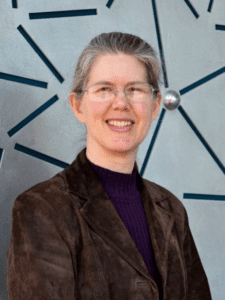
MICDE Seminar: Theresa Windus, Chemistry, Iowa State University
CHEM 1640 930 N University, Ann Arbor, MI, United States

Note: Topic order is subject to change. This workshop is designed to introduce participants to SPSS. It will cover the fundamentals of SPSS, within-case transformations, data management with multiple files, […]
Regular expressions are perfectly suited for people who like puzzles. Regular expressions are a sequence of characters used to define a search pattern. They are commonly used to do “find” […]
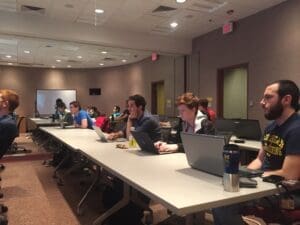
Mobile app development is one of the biggest new industries of the last decade. As of 2017, Google has stated that over 2 billion devices around the world use the […]

Note: Topics are subject to change. Topics: Basics – Interfacing with Stata, Do-files, getting help. Working with Data Sets – Importing, opening, and saving data files. Data Management – Getting […]
Students interested in computational science are invited to learn about graduate programs that will prepare them for success in computationally intensive fields. Pizza and pop will be provided. Two sessions […]
This workshop introduces participants to MATLAB. Topics include indexing and slicing of vectors and matrices, creation of script M-files and functions, control flow operators and basic 2D and 3D visualization. […]
This workshop will cover introductory GIS concepts, tools, and techniques. We will use ArcGIS to learn basics of GIS by solving 2-3 specific problems. We will use the graphical user […]