Events

- This event has passed.
MICDE – LANL Michigan SPARC Seminar: Building AI Systems for Scientific Discovery
September 2 @ 9:00 am - 10:00 am
Venue: McDivitt Conference Room, FXB 1044
Mike Grosskopf
Bio: Mike Grosskopf is a scientist in the Statistical Sciences Group (CAI-4) at Los Alamos National Laboratory (LANL). He holds a Ph.D. in Statistics from Simon Fraser University. Prior to his Ph.D. he worked as a research assistant at the University of Michigan with R. Paul Drake and Carolyn Kuranz in the AOSS (now CLASP) Department. His current research combines statistical machine learning, scientific computing, and artificial intelligence, with a recent focus on developing reliable AI agents that accelerate scientific research.
URSA – Using agentic AI to accelerate science
Abstract: Agentic AI and coding agents are everywhere in life and the URSA team at LANL are adding to that in the scientific discovery domain. Our approach to agentic AI is designed around the idea that humans are at their best when thinking, generating creative ideas, asking questions, suggesting solutions, vetoing bad ideas and understanding results. We also want to develop agents that can take advantage of increasingly powerful AI to answer increasingly abstract questions and quickly implement prototypes of big ideas. The core elements of URSA will be presented which include agents for hypothesizing, planning, execution, simulation management, and multi-agent coordinated systems. Results of doing so on complex scientific discovery and R&D tasks will be discussed to demonstrate the capabilities of these tools.
Alex Wadell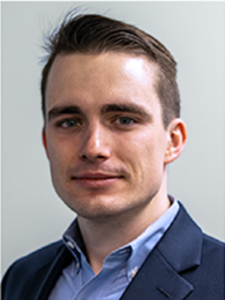
Bio: Alex Wadell is an AI-for-science postdoctoral researcher at LANL. He holds a Ph.D. in Mechanical Engineering from the University of Michigan. His research focuses on foundation models and AI agents for scientific discovery.
Augmenting AI Agents with SciFMs for Design & Discovery
Abstract: Scientific Foundation Models (SciFMs) are powerful tools for prediction, simulation, and design, but their impact depends on whether scientists and AI agents can use them effectively in real-world workflows. The talk will explore how SciFMs can be connected to AI agents through tool-based interfaces, with a focus on programmatic tool calling and the practical challenges of incorporating SciFMs into agentic design loops. Two examples will be presented: molecular discovery with MIST and perturbed-layer interface design with JANUS. In both cases, agents used SciFM predictions to construct task-specific optimization workflows and propose candidate designs. Along with this Nomad, the underlying framework used to integrate both SciFMs into an agentic harness, will be introduced and the steps required to connect additional models will be described.